



Little known fact about me: I save all my fortunes from my fortune cookies.
Why? While I don't think they're entirely true (because they're probably fabricated from some guy hired to do this at a fortune cookie factory for 8 hours a day), I think it's nice to keep little slips of paper that emit positivity. I know...I'm one of those seemingly annoying optimistic kids but hey, positivity always beats out negativity. =)
In any case, we had Chinese food for dinner and I did my usual fortune cookie ritual/routine: crack the fortune cookie in the middle, turn the fortune around so as not to read it before I finish my fortune cookie, eat both ends, then read the fortune. Low and behold, this is what it said tonight:
The world will soon be ready to receive your talents.
Whether this is some statement from God or what have you, I think it comes at the most appropriate time: a little over two weeks before I depart for Burkina Faso.
Yesterday, I had dinner with Anna, a Returned Peace Corps Volunteer (RPCV) who served for three years in Burkina Faso. We met through PeaceCorpsConnect.org, a social networking site exclusively for Peace Corps Volunteers, Invitees, Applicants, Returned Volunteers, and staff. We met up at Bissap Baobab on Mission in SF and she gave exactly what I needed: some real talk on what life would be like in Burkina Faso and tips for preparing to embark on this two-year adventure. I can only talk to friends and family so much about Burkina Faso without realizing how much I repeat the same thing over and over again!
Needless to say, Anna calmed my nerves about leaving and dropped the anxiety level from a 9 to a 3, hahaha! Amid the really good West African food and pulsate-through-your-body music, she talked about packing, what to wear, staging, training, host families, biking, group dynamics, getting sick/medical stuff, safety, the weather, the food, living at your site for 2 years, travel, communication/mail/the Internet, community integration, language, not being what many perceive as American (a.k.a. not being white)...the list goes on. One thing I'll never forget Anna mentioning was the impact I'd have on my community. How I shouldn't expect myself to build schools and libraries, nor revamp the educational system in Burkina Faso...that isn't my purpose. Rather, it's the 'little' accomplishments that make a difference -- like learning the local language and integrating well into the community, creating a better understanding of Americans (and vice-versa), or convincing five conservative fathers to send their girls to school. If there's anything I took from last night's conversation, that was it. And out of all of this, she gave me the huge backpack she used to lug all her things to Burkina Faso. So thanks, Anna!
That said, I'm headed to my last big Stateside adventure with the old friends from high school before I head to Africa: LAS VEGAS, baby!! Good night, world. =)
Saturday, May 23, 2009

Wednesday, April 22, 2009
Inspiration at the Bay Area Peace Corps Bon Voyage.
I love meeting new people but hesitated a little to go to the Bay Area Peace Corps Bon Voyage Celebration – partially because I was tired from work and partially because I didn’t want to take MUNI all the way to the Marina. But boy, I’m sure glad I did! Here’s a summary of what happened (and info that could help future PCVs/inquiring minds):
Language Training:
Two former Peace Corps language instructors from West Africa (one was from Cameroon) talked about how language learning is much different in the Peace Corps. With three months of training, they focus on all aspects – reading, writing and listening – simultaneously, for hours each day. As well, their teaching methods are different. Getting called out for making a mistake while learning a language is frustrating; I know firsthand because my French teacher freshman year of high school would ALWAYS call me out on my mistakes in front of everyone, inhibiting my desire to learn French. Apparently (and I’m guessing it depends on each instructor), they’ll make note of your mistakes during class and let you know about them after class when it’s one-on-one to avoid embarrassment in front of your fellow trainees. I think that approach is more conducive to learning a language faster, you know?
Cross-Cultural Workshop:
Joe Lurie, RPCV and Director of the International House at UC Berkeley, conducted a really interesting workshop on cross-cultural experiences and related it to his experiences as an RPCV in Kenya during the late 1960’s and as current Director of the International House.
He kept reiterating a (I think…) Moroccan proverb: “The stranger only sees what he/she knows” (or maybe it’s, “The stranger only knows what he/she sees”) and used it as the "refrain" for his workshop.
I’ll bullet point some of his super interesting cross-cultural experiences (in Kenya and the International House) to give you a better idea of what he said:
• Individual vs. community: When he was in Kenya, a lot of Kenyans would come by his house and visit constantly. After several visits, he realized they never invited him to their own homes and asked them about it one night…many of his new Kenyan friends said there was no need to invite him because he was ALWAYS invited to their homes, without any verbal invitation. It just goes to show you how community-focused many African countries (and other countries, for that matter) are and how individually-focused our American society is.
• “Manners”: One thing that initially bugged him was the way many Kenyans would release their snot after coughing or if they had a runny nose – by simply releasing it wherever they were for all to see. One of his Kenyan friends explained it made more sense than what us Americans do: blow our snot into some tissue and put that germ-ridden thing back into our pockets.
• Greetings: In many African countries, greetings are exponentially more important than saying “please” or “thank you.” A simple gesture of the usual “hello, how are you, how’s your family” is expected for every person you encounter, even if you saw them ten minutes earlier. One of the former language instructors said that there was a break during one of his training classes and his students wanted to run to the post office and drop off their postcards. An hour later, they came back infuriated because the guy refused to give them stamps but served the other people in line. Turns out the class never greeted the guy and thus, they were unable to get stamps.
• Respect: Personally, respect is something that’s very much prevalent in my family. Respect for your elders is paramount, and the same goes for various African countries. Being called “auntie” or “uncle” is a sign of respect and being called “grandma” or “grandpa” is a huge honor because older age is considered “higher up on the totem pole.”
• Safe journey to guests: At the International House at UC Berkeley, a Ghanaian student and an American student took the same class, and they decided one morning to meet up before a test to study. The American student lives on the 8th floor while the Ghanaian student lives on the 2nd floor, so the American student decided to head down to the Ghanaian student’s room. After the study session was complete and she said farewell, the American student proceeded up the stairs back to her apartment, only to feel the presence of someone following her. It turns out that the Ghanaian student was, as a host, ensuring the safe return of her guest back to her home. In Ghana (and much of Africa), it’s customary to walk your guest halfway or all the way home to ensure their safe arrival. Imagine that!
A lot of people seemed so shocked by what was said, and I was a little bit, too…until I thought about it a bit more and realized that the African way makes just as much sense as the American way of living. In fact, I probably related more to the African way because Filipino culture tends to also revolve around community, family, hospitality (particularly food sharing), and respect for your elders. Thanks, immigrant parents! =)
After, I met two fellow PCVs – one that’s completed all of his paperwork and is waiting for an invitation and the other who was training in Kenya but is soon going to be transferred to Niger because her skills better match a program there. Since Niger and Burkina Faso are next to each other, hopefully we’ll try and meet up. Niiiiiice. So Jonathan and Lisa, if you’re reading this: what up!! Hahaha!
Language Training:
Two former Peace Corps language instructors from West Africa (one was from Cameroon) talked about how language learning is much different in the Peace Corps. With three months of training, they focus on all aspects – reading, writing and listening – simultaneously, for hours each day. As well, their teaching methods are different. Getting called out for making a mistake while learning a language is frustrating; I know firsthand because my French teacher freshman year of high school would ALWAYS call me out on my mistakes in front of everyone, inhibiting my desire to learn French. Apparently (and I’m guessing it depends on each instructor), they’ll make note of your mistakes during class and let you know about them after class when it’s one-on-one to avoid embarrassment in front of your fellow trainees. I think that approach is more conducive to learning a language faster, you know?
Cross-Cultural Workshop:
Joe Lurie, RPCV and Director of the International House at UC Berkeley, conducted a really interesting workshop on cross-cultural experiences and related it to his experiences as an RPCV in Kenya during the late 1960’s and as current Director of the International House.
He kept reiterating a (I think…) Moroccan proverb: “The stranger only sees what he/she knows” (or maybe it’s, “The stranger only knows what he/she sees”) and used it as the "refrain" for his workshop.
I’ll bullet point some of his super interesting cross-cultural experiences (in Kenya and the International House) to give you a better idea of what he said:
• Individual vs. community: When he was in Kenya, a lot of Kenyans would come by his house and visit constantly. After several visits, he realized they never invited him to their own homes and asked them about it one night…many of his new Kenyan friends said there was no need to invite him because he was ALWAYS invited to their homes, without any verbal invitation. It just goes to show you how community-focused many African countries (and other countries, for that matter) are and how individually-focused our American society is.
• “Manners”: One thing that initially bugged him was the way many Kenyans would release their snot after coughing or if they had a runny nose – by simply releasing it wherever they were for all to see. One of his Kenyan friends explained it made more sense than what us Americans do: blow our snot into some tissue and put that germ-ridden thing back into our pockets.
• Greetings: In many African countries, greetings are exponentially more important than saying “please” or “thank you.” A simple gesture of the usual “hello, how are you, how’s your family” is expected for every person you encounter, even if you saw them ten minutes earlier. One of the former language instructors said that there was a break during one of his training classes and his students wanted to run to the post office and drop off their postcards. An hour later, they came back infuriated because the guy refused to give them stamps but served the other people in line. Turns out the class never greeted the guy and thus, they were unable to get stamps.
• Respect: Personally, respect is something that’s very much prevalent in my family. Respect for your elders is paramount, and the same goes for various African countries. Being called “auntie” or “uncle” is a sign of respect and being called “grandma” or “grandpa” is a huge honor because older age is considered “higher up on the totem pole.”
• Safe journey to guests: At the International House at UC Berkeley, a Ghanaian student and an American student took the same class, and they decided one morning to meet up before a test to study. The American student lives on the 8th floor while the Ghanaian student lives on the 2nd floor, so the American student decided to head down to the Ghanaian student’s room. After the study session was complete and she said farewell, the American student proceeded up the stairs back to her apartment, only to feel the presence of someone following her. It turns out that the Ghanaian student was, as a host, ensuring the safe return of her guest back to her home. In Ghana (and much of Africa), it’s customary to walk your guest halfway or all the way home to ensure their safe arrival. Imagine that!
A lot of people seemed so shocked by what was said, and I was a little bit, too…until I thought about it a bit more and realized that the African way makes just as much sense as the American way of living. In fact, I probably related more to the African way because Filipino culture tends to also revolve around community, family, hospitality (particularly food sharing), and respect for your elders. Thanks, immigrant parents! =)
After, I met two fellow PCVs – one that’s completed all of his paperwork and is waiting for an invitation and the other who was training in Kenya but is soon going to be transferred to Niger because her skills better match a program there. Since Niger and Burkina Faso are next to each other, hopefully we’ll try and meet up. Niiiiiice. So Jonathan and Lisa, if you’re reading this: what up!! Hahaha!
Monday, January 19, 2009
It's official with the Peace Corps -- Africa, here I come (again)!
What seems like forever is now finally here. Last Saturday, I received my invitation in the mail, informing me of my placement in the French-speaking country of Burkina Faso in West Africa! On Thursday, after reading most of what the Peace Corps sent me (a lot of information!), I called to finally accept and now more than ever, the reality of living in another country for two years and three months is actually sinking in.

Here are some of the basic details:
Why 'Girls Education and Empowerment'? Apparently, boys outnumber girls in school (2 to 1). What more, Burkina Faso ranks second lowest on the Human Development Index and is considered one of the most illiterate countries in the world. On top of that, Burkinabé society fosters this mentality that boys are to attend school while girls are to stay at home -- something that, especially now, needs to be shattered!
From what I know so far, I'll be working with villages, community leaders, parents, female and male students, and teachers to understand the importance of education and gender equity. From starting after-school programs for girls to working with parents associations to creating life-skills and health training sessions (and much more), I definitely have my work cut out for me -- but I'm super excited for this!
And what's better...with Barack Obama as our new President, Americans in foreign countries will once again be a welcomed presence. Holla!

Let's make it happen, baby!
P.S.: Plans for a bomb-ass pre-departure weekend in the Bay filled with food, DRINKS (!!), and good times + airport farewell are in the works. Even though the dates are set up, it's not completely set in stone. I won't know the actual departure date (which will probably move only a couple days before or after the said date) until early May. So yeah. =)
P.P.S.: I've decided to keep this blog for my travels abroad in Burkina Faso. I was going to create a new one, but I might as well stick to one to make it less confusing. Holla!
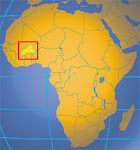
Burkina Faso.
Here are some of the basic details:
- Country of Service: Burkina Faso
- Program Title: Girls Education and Empowerment
- Job Title: Community Education and Development Outreach Agent
- [the following dates are tentative and not set in stone as of yet...]
- Orientation Date: June 8th 2009 (probably in Philadelphia)
- Pre-Service Training: June 10th to August 29th 2009 in Ouahigouya, Burkina Faso
- Dates of Service: August 29th 2009 to August 28th 2011
Why 'Girls Education and Empowerment'? Apparently, boys outnumber girls in school (2 to 1). What more, Burkina Faso ranks second lowest on the Human Development Index and is considered one of the most illiterate countries in the world. On top of that, Burkinabé society fosters this mentality that boys are to attend school while girls are to stay at home -- something that, especially now, needs to be shattered!
From what I know so far, I'll be working with villages, community leaders, parents, female and male students, and teachers to understand the importance of education and gender equity. From starting after-school programs for girls to working with parents associations to creating life-skills and health training sessions (and much more), I definitely have my work cut out for me -- but I'm super excited for this!
And what's better...with Barack Obama as our new President, Americans in foreign countries will once again be a welcomed presence. Holla!
In Africa, Summer 2007. Bungee jumping at Victoria Falls, Zambia.
Let's make it happen, baby!
P.S.: Plans for a bomb-ass pre-departure weekend in the Bay filled with food, DRINKS (!!), and good times + airport farewell are in the works. Even though the dates are set up, it's not completely set in stone. I won't know the actual departure date (which will probably move only a couple days before or after the said date) until early May. So yeah. =)
P.P.S.: I've decided to keep this blog for my travels abroad in Burkina Faso. I was going to create a new one, but I might as well stick to one to make it less confusing. Holla!
Subscribe to:
Posts (Atom)